


Choosing between FCL and LCL can feel like deciding between buying your own car or sharing a cab. Both get you where you need to go but the cost, speed, and comfort are different whether you’re shipping a few boxes or a warehouse full of goods. Knowing how FCL and LCL work helps you pick the smarter, cheaper, and faster option for your business.
- Key Takeaways
- FCL vs LCL — Key Differences at a Glance
- Understanding the Basics of FCL and LCL
- Cost Comparison: Which Option Saves You More Money?
- Hidden Charges to Watch For
- Transit Time & Delivery Speed
- Cargo Safety and Handling Risks
- Flexibility and Scalability
- When to Choose FCL Shipping
- When to Choose LCL Shipping
- Environmental Impact Comparison
- FCL vs LCL for SMEs and eCommerce Businesses
- Common Mistakes to Avoid When Choosing Between FCL and LCL
- Digital Tools to Help You Decide
- Quick Decision Checklist — Which One is Right for You?
- How to Read This Checklist
- Conclusion
Key Takeaways
- FCL gives you speed and security, while LCL offers flexibility and lower upfront costs.
- Choose based on shipment size, timing, and how often you ship not just the lowest price.
Use digital tools and forwarder insights to compare both options and make smarter shipping decisions.
FCL vs LCL — Key Differences at a Glance
| Factor | FCL (Full Container Load) | LCL (Less than Container Load) |
| Container Space | You get the entire container to yourself. Ideal for large shipments or when you want complete control. | You share container space with other shippers, paying only for the portion you use. |
| Cost Structure | Higher total cost but cheaper per unit when the container is mostly full. | Lower total cost, but higher per-unit rate due to shared handling and space. |
| Transit Speed | Faster your container ships directly without waiting for consolidation. | Slower — consolidation and deconsolidation add extra time. |
| Handling & Safety | Minimal handling; cargo stays sealed and untouched until delivery. Lower risk of damage or loss. | More handling during loading and sorting; slightly higher risk of minor damage. |
| Flexibility | Best for steady, high-volume shipments. | Great for small, frequent, or irregular shipments. |
| Customs Clearance | Simpler since all goods belong to one shipper. | Slower, as customs checks affect all shippers sharing the container. |
| Best For | Large businesses, high-value cargo, or time-sensitive goods. | SMEs, startups, and e-commerce businesses shipping smaller loads. |
Understanding the Basics of FCL and LCL
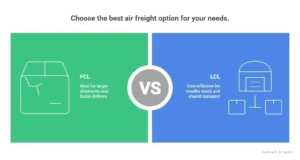
In FCL, your goods are packed into a single container that’s sealed and shipped directly from your warehouse to the destination. No other cargo is mixed in. That means fewer touchpoints and faster delivery times.
LCL, on the other hand, is all about sharing. Your goods travel alongside others in the same container. Once it reaches the destination port, the container is opened, and each shipment is separated and delivered to its respective owner. It’s slightly slower but far more affordable for smaller loads.
Cost Comparison: Which Option Saves You More Money?
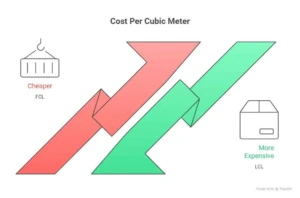
FCL might sound expensive since you’re paying for an entire container, but for large shipments, it’s often cheaper per item. The cost spreads out across your cargo.
LCL usually has a lower total price because you pay only for the space you use. However, it can end up costing more per cubic meter once you factor in handling and consolidation fees. If your goods fill over two-thirds of a container, FCL usually gives you better value.
Hidden Charges to Watch For
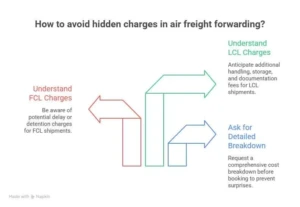
Both shipping methods come with extra costs you’ll want to know about.There may be delay or detention charges if the container is kept at the port for an extended period in the case of FCL. In the case of LCL, there may be some additional handling, storage, and documentation charges as your shipment goes through consolidation and deconsolidation.
By far the smartest thing to do is to ask for a detailed breakdown of the costs before you make a booking. Surprises are great for birthdays, not for shipping invoices.
Transit Time & Delivery Speed
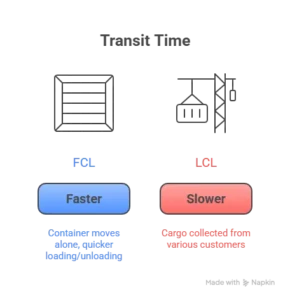
FCL wins on speed almost every time.As the container is moving alone, it gets loaded and unloaded more quickly, and it’s not waiting for other shipments to be grouped or separated.
It generally takes more time for LCL to be shipped, as the forwarder has to collect the cargo from various customers, pack the container, and unpack it at the destination. If timing is critical, FCL might be the safer bet. If you can plan ahead, LCL works just fine.
Cargo Safety and Handling Risks

With FCL, your cargo stays sealed from the moment it’s packed until it arrives. That means minimal handling, lower risk of damage, and better security.
During the consolidation and sorting, LCL shipments are, however, opened several times. That thus increases the probability of scratches, dents, or misplaced labels- particularly in case the packaging is not strong enough. A lot of professional packing and labelling can help here.
Flexibility and Scalability
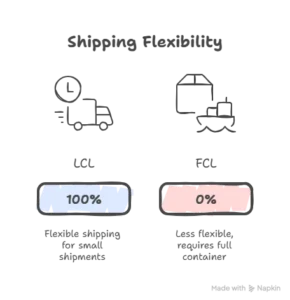
LCL wins hands down when it comes to flexibility. There is no need to wait for a full container to be filled, thus you can ship at any time you want. This is what makes it the absolute right choice for startups, e-commerce brands that are growing, and businesses that have to deal with small or irregular shipments.
FCL, however, scales better for growing businesses. Once you’re shipping consistently in bulk, it gives you speed, stability, and predictable costs. Many companies start with LCL and move to FCL as their orders grow.
When to Choose FCL Shipping
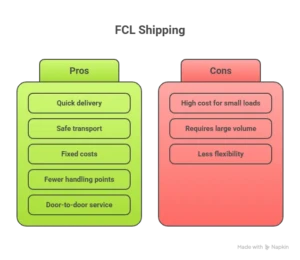
Go for FCL if you’re shipping a large or high-value load that needs to arrive quickly and safely. It’s ideal when you can fill most of the container or when your products are fragile or expensive.
FCL is also great for businesses that prefer fixed costs and fewer handling points. It’s the smooth, private, door-to-door experience of the shipping world.
When to Choose LCL Shipping
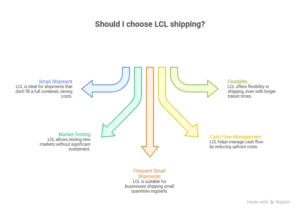
LCL makes sense when your shipment doesn’t fill a full container or when you want to test a new market without overcommitting. It’s perfect for small businesses, exporters just starting out, and anyone shipping in smaller quantities more frequently.
You’ll save money upfront, manage cash flow better, and ship more flexibly even if it means slightly longer transit times.
Environmental Impact Comparison
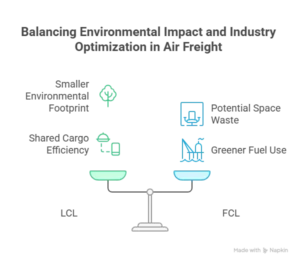
LCL often has a smaller environmental footprint per shipment since containers are filled to capacity with shared cargo. FCL containers, if not fully packed, waste space and that means less efficiency per ton moved.
However, modern shipping lines are optimizing both options through greener fuel and smarter route planning. So whether it’s FCL or LCL, the industry as a whole is steadily becoming more eco-friendly.
FCL vs LCL for SMEs and eCommerce Businesses
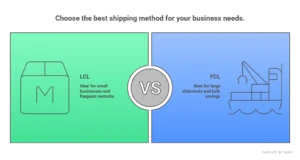
For small and medium-sized enterprises (SMEs) or online stores, LCL is a fantastic entry point into global shipping. You don’t need huge volumes or warehouse space just enough to fill your share of a container.
As your business grows, you’ll likely transition to FCL for speed, control, and bulk savings. Many e-commerce brands actually use both: LCL for small, frequent restocks and FCL for big seasonal shipments.
Common Mistakes to Avoid When Choosing Between FCL and LCL

A lot of shippers make the mistake of picking based only on cost. But there’s more to it timing, cargo type, and reliability matter just as much.
Another mistake is poor packaging. LCL cargo especially needs strong packaging since it’s moved multiple times. Some also forget about customs timing delays from missing paperwork can cancel out any savings. The best approach is to balance cost with convenience, not just look at the lowest quote.
Digital Tools to Help You Decide

Freight technology has made comparing FCL and LCL easier than ever. It is possible to check rates, book containers, and track shipments online nowadays. In addition to that, the platform displays the availability in real-time and even advises you which option is more economical in case of a certain cargo size.
These digital tools help small businesses act like big ones making quick, data-backed decisions with confidence.
Quick Decision Checklist — Which One is Right for You?
How to Read This Checklist
If your shipment fills most of a container, FCL is the practical, time-saving choice.
If you’re sending smaller volumes or testing new regions, LCL gives you flexibility without big upfront costs.
And for growing businesses, it’s common to start with LCL and switch to FCL as volume increases both can work hand-in-hand.
| Question | If You Answer “Yes” | Best Option |
| Do you have enough cargo to fill most of a container? | Your goods nearly fill or completely occupy a 20ft or 40ft container. | FCL |
| Do you ship small or irregular batches? | You send partial loads or ship occasionally based on demand. | LCL |
| Do you need faster delivery and direct shipping? | You want shorter transit times and fewer stops. | FCL |
| Is keeping costs low your main goal? | You’re okay with a slightly slower schedule to save money. | LCL |
| Are your goods high-value or fragile? | You want full control, private space, and less handling. | FCL |
| Are you testing new markets or small orders? | You’re exploring new buyers or trial shipments. | LCL |
| Do you prefer predictable pricing and fewer surprises? | You like fixed rates without shared-cargo variables. | FCL |
| Do you prioritize flexibility and smaller inventory cycles? | You restock frequently and need adjustable volumes. | LCL |
Conclusion
FCL and LCL both have their place in sea freight. FCL offers privacy, speed, and control, while LCL delivers flexibility, affordability, and easier access for smaller shippers.
The key is understanding your shipment size, timing, and goals. Once you do, picking between FCL and LCL becomes simple one’s not better than the other, just better for your needs.
To learn more about FCL and LCL Shipping, explore our related blog articles!
- Sea Freight Forwarding Guide: Everything You Need to Know
- Types of Sea Freight Shipping
- What is Full Container Load (FCL)
- Step-by-Step Sea Freight Forwarding Process
- What Affects Sea Freight Rates?
- Benefits of Using Sea Freight Forwarding
- Challenges of Sea Freight Forwarding
- Choosing the right sea freight forwarder
- Top Sea Freight Forwarders in the UAE
- Getting a Quote & Finding Sea Freight Providers
- Key Documents Involved in Sea Freight Forwarding