
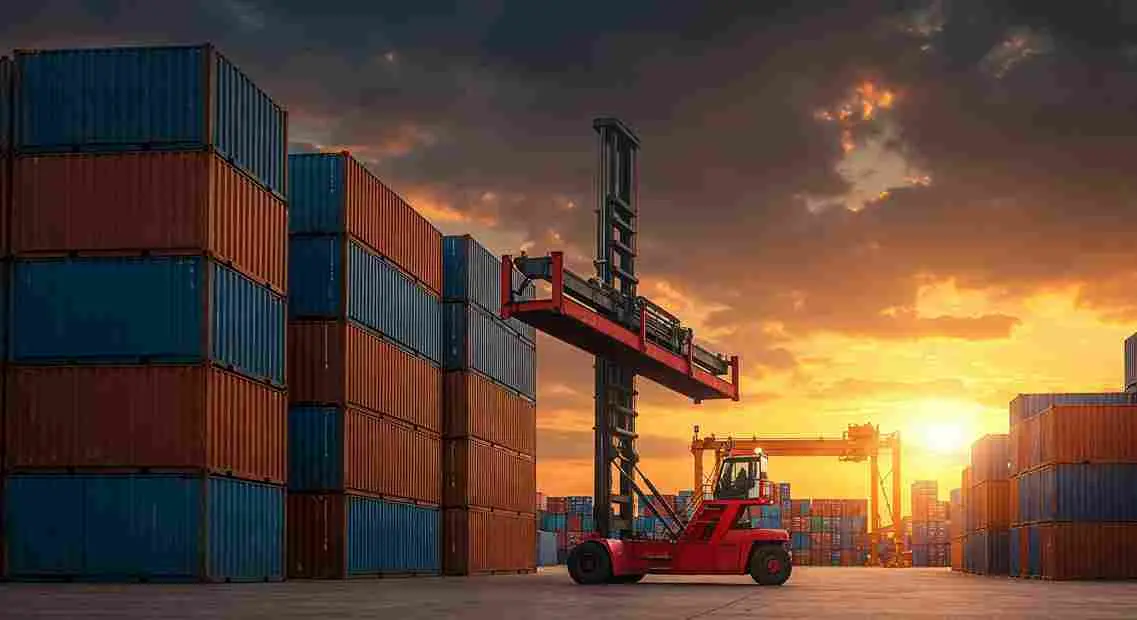
Ever wondered how massive shipments travel safely across oceans? Full Container Load, or FCL, is how businesses move big loads without sharing space or stress. It’s like renting your own shipping container — private, secure, and direct from door to port. Whether you’re new to shipping or planning to expand globally, understanding FCL makes the whole process simpler and smoother.
- Key Takeaways
- What is FCL Shipping?
- How FCL Shipping Works
- FCL Shipping Process Explained
- Container Stuffing Options
- Loading Time and Renting Options for FCL
- Container Sizes and Types Used in FCL
- How to Calculate FCL Shipping Costs
- Example of FCL Cost Breakdown
- Pro Tips for Getting the Best FCL Rates
- When to Choose FCL Shipping
- Common Mistakes in FCL Shipping and How to Avoid Them
- Documentation Required for FCL Shipping
- Incoterms and FCL Shipping Responsibilities
- Advantages of Choosing FCL Shipping
- Challenges and Limitations of FCL
- Digital Tools and Tracking for FCL Shipments
- FCL vs LCL: Which One Should You Choose?
- Conclusion
Key Takeaways
- FCL gives you a private, sealed container — faster, safer, and ideal for bulk cargo.
- Stay organized and plan your schedule to avoid extra port and storage charges.
- Use digital tools and reliable partners to track your shipments and cut down on paperwork.
What is FCL Shipping?
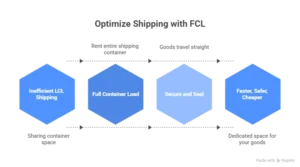
FCL, or Full Container Load shipping is when your goods take up a whole shipping container. You’re not sharing space with anyone else — it’s all yours. Imagine renting an entire moving truck instead of sharing one with neighbors. Everything inside belongs to you, it’s sealed, and it travels straight to your destination.
There are two main ways people ship goods overseas: FCL and LCL.
LCL means you share space with other shipments, which works fine for small loads. But if your goods fill most of a container or need extra protection, FCL makes more sense. It’s often faster, safer, and actually cheaper per item once you’ve got enough cargo.
How FCL Shipping Works
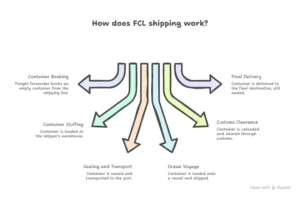
Here’s the short version. Your freight forwarder books an empty container from the shipping line. That container shows up at your warehouse or factory. You load it — that’s called “stuffing.” Once it’s full, the door is sealed, and off it goes to the port. From there, it’s loaded onto a vessel and shipped across the ocean.
When the ship arrives, your container is unloaded and cleared through customs. Then it’s delivered to the final spot, still sealed the same way it left. No one opens it mid-way. That’s the magic of FCL — fewer hands, less hassle, and more control.
FCL Shipping Process Explained

Container Stuffing Options
You can choose where to load your goods. Some people do it right at their warehouse, which saves time if they’ve got the space and equipment. Others send the goods to a loading yard, called a container freight station, where a team handles the packing for them.
Packing right is very important in any case of loading. Goods move around during long sea trips, so you need to make sure everything fits tightly. Just imagine it as packing a suitcase, stuff the gaps so nothing slides or gets damaged.
Loading Time and Renting Options for FCL
You don’t get the container forever. Shipping lines give you a few free days to load it before charging extra. If you keep it longer, you’ll pay a small rental fee per day. Once the container is sealed, the clock keeps ticking. Returning it on time helps you avoid demurrage, which is just a fancy word for “extra fees because you took too long.”
Planning your schedule well can save you money and stress.
Container Sizes and Types Used in FCL
Most FCL shipments use 20-foot or 40-foot containers, but there are variations:
| Container Type | Size | Common Use |
| 20ft Standard | 33 cubic meters | Heavier cargo like tiles, machinery, or metal parts |
| 40ft Standard | 67 cubic meters | Lighter but larger goods like furniture or textiles |
| 40ft High Cube | 76 cubic meters | Bulky cargo needing extra height |
| Reefer (Refrigerated) | 20ft or 40ft | Food, medicine, or temperature-controlled items |
| Open Top / Flat Rack | Varies | Oversized machinery or construction materials |
Choosing the right type helps optimize space and protect your cargo during transit.
How to Calculate FCL Shipping Costs

FCL costs vary depending on the route, season, and cargo type. Shipping during busy months like December usually costs more because demand spikes. The type of goods also affects price — chemicals or frozen products need special containers and handling.
When you ask for a quote, you’ll see a few parts adding up. There’s the ocean freight charge, handling fees at both ports, insurance, and customs clearance costs. Once you add everything together, you’ll get a realistic picture of the full cost from pickup to delivery.
To give you an idea, shipping a 20-foot container from Dubai to Hamburg might cost around two to two and a half thousand dollars, depending on the time of year and services included. It’s a mix of shipping fees, port handling, insurance, and paperwork.
Example of FCL Cost Breakdown
Let’s say you’re shipping a 20ft container from Dubai to Hamburg.
Here’s how a typical cost might look:
| Cost Component | Example Price (USD) |
| Ocean Freight | 1,500 |
| Port Handling (Origin) | 200 |
| Port Handling (Destination) | 250 |
| Documentation | 100 |
| Insurance | 80 |
| Customs Clearance | 120 |
| Total Estimated Cost | 2,250 USD |
Of course, rates change by route, season, and cargo type — but this gives you a ballpark figure.
Pro Tips for Getting the Best FCL Rates

Booking early is one of the simplest ways to save money. Prices usually rise the closer you get to the sailing date. Another practicable tactic is transportation in less busy months- you may be able to find better prices because of the low demand.
If you work with a reliable freight forwarder, they can help negotiate rates and guide you on container options. Sometimes people pick a 40-foot container when a 20-foot one would do, paying for space they don’t use. A little planning helps you avoid that. And always keep an eye on your timelines. The faster you return containers, the less you’ll spend on rental or storage fees.
When to Choose FCL Shipping

FCL is a logical choice if the volume of your shipment is considerably large or you decide to have complete control over your goods. Because your goods are sealed and separate, it is an excellent method for fragile, expensive or sensitive items. Besides that, it is also faster as you do not have to wait for the containers to be filled with other people’s cargo before departure.
Most of the time, FCL would be the better and more money-saving option if your freight occupies a major part of the container space.
Common Mistakes in FCL Shipping and How to Avoid Them

A few small errors can lead to big delays. The most common mistake is poor packing — goods that aren’t secured can move and get damaged at sea. Another issue is missing or mismatched paperwork. Customs officers compare all your documents, and even a tiny error can hold your container at the port.
Skipping insurance is another risky move. It’s tempting to save that cost, but sea freight comes with real risks — bad weather, rough handling, or even container loss. And finally, keep track of your container return date. Late returns are one of the easiest ways to rack up surprise fees.
Documentation Required for FCL Shipping

FCL shipments run on paperwork. You’ll need a Bill of Lading, which proves ownership, a Commercial Invoice that lists your goods and their value, a Packing List to describe what’s inside, and a Certificate of Origin to show where your goods were made. You’ll also need an Insurance Certificate, a Shipper’s Letter of Instruction for your forwarder, and the standard customs forms for export and import clearance.
Each of these documents connects to the next, so consistency matters. Make sure the same details appear across all of them — it keeps customs happy and your shipment moving.
Incoterms and FCL Shipping Responsibilities
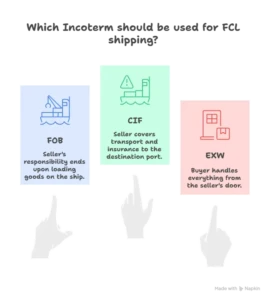
Incoterms are basically trade shortcuts that explain who’s responsible for what. Under FOB (Free On Board), the seller’s job ends once the goods are loaded on the ship. With CIF (Cost, Insurance, and Freight), the seller covers transport and insurance until the ship reaches the destination port. EXW (Ex Works) means the buyer handles everything from the seller’s door onward.
Knowing which Incoterm applies helps avoid confusion later about who pays for which stage of shipping.
Advantages of Choosing FCL Shipping
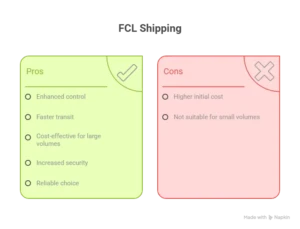
The biggest benefit of FCL is control. Since the container is sealed the entire time, this means your goods are exposed to fewer hands. It travels faster than shared shipments because it doesn’t need to wait for others to load or unload. Additionally, in the case of large volumes, FCL is generally less expensive per unit than LCL.
It’s also more secure. No mixing with other shippers’ goods means less risk of damage or loss. For businesses that ship regularly, FCL is a reliable and efficient choice.
Challenges and Limitations of FCL

Of course, FCL isn’t for everyone. If you’re shipping small quantities, paying for an entire container might not make sense. During busy seasons, it can also be tricky to find available containers. And if you’re not careful with timing, you can face storage or demurrage charges.
Still, the advantages outweigh the drawbacks for medium and large shipments. Handling FCL will become second nature once you have mastered the operation.
Digital Tools and Tracking for FCL Shipments
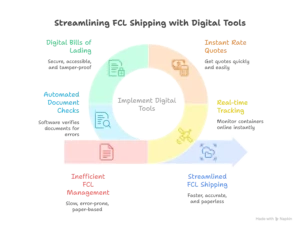
Technology has made FCL shipping much easier to manage. You can now track containers online in real time, get instant rate quotes, and access digital Bills of Lading that can’t be lost or damaged. Many freight companies also use software that checks documents for errors automatically.
That means fewer mistakes, faster updates, and less paperwork to shuffle around. Going digital saves both time and sanity.
FCL vs LCL: Which One Should You Choose?
| Factor | FCL (Full Container Load) | LCL (Less than Container Load) |
| Space | You get the entire container to yourself. Your cargo stays sealed and separate from others. | You share container space with other shippers. Each pays for the portion they use. |
| Cost | Higher total cost, but cheaper per item when you fill most of the container. | Lower total cost, but higher cost per item since you’re sharing space. |
| Transit Time | Faster delivery — your container goes directly from origin to destination without waiting. | Slower because shipments are consolidated and separated at different ports. |
| Handling | Minimal handling — the container is sealed once and opened only at the destination, lowering damage risk. | More handling — cargo is combined and rearranged, increasing the chance of minor damage. |
| Ideal For | Large or high-value shipments that need speed, security, and full control. | Small shipments or businesses that don’t yet have enough cargo for a full container. |
If your cargo volume fills most of a container, FCL is usually the smarter choice. It’s quicker, safer, and gives you complete control over your shipment from start to finish.
Conclusion
FCL shipping is a method that can give you control, speed, and security when you are transporting goods via the ocean. After you get familiar with the process, it is not really that difficult. What you do is simply book a container, load it, seal it, and it goes literally as you have packed it- no stops, no mixing, and no surprises.
If you want FCL to be a reliable way to move your business forward, then the trick is to stay organized, choose the right partners, and plan your timelines well. If you learn this trick, then FCL is the one you can depend upon.
To learn more about Full Container Load shipping, explore our related blog articles!
- Sea Freight Forwarding Guide: Everything You Need to Know
- Step-by-Step Sea Freight Forwarding Process
- What Affects Sea Freight Rates?
- Benefits of Using Sea Freight Forwarding
- Challenges of Sea Freight Forwarding
- Choosing the right sea freight forwarder
- Top Sea Freight Forwarders in the UAE
- Getting a Quote & Finding Sea Freight Providers
- Key Documents Involved in Sea Freight Forwarding