

Shipping goods across oceans sounds big and complicated — and honestly, it can be.
- Getting a Sea Freight Quote
- Information You’ll Need to Provide
- Understanding What’s Included in a Quote
- How to Compare Quotes Effectively
- Tips to Negotiate Better Freight Rates
- Hidden Costs to Watch For
- How to Finding Sea Freight Providers
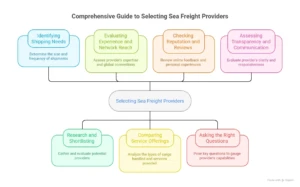
- Identify Your Shipping Needs
- Research and Shortlist Providers
- Evaluate Experience and Network Reach
- Compare Service Offerings and Capabilities
- Check Reputation and Reviews
- Ask the Right Questions
- Assess Transparency and Communication
- Key Factors to Consider When Choosing a Sea Freight Provider
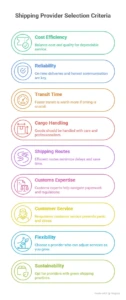
- Cost Efficiency
- Reliability and Track Record
- Transit Time and Speed
- Cargo Handling and Safety Measures
- Shipping Routes and Port Facilities
- Customs Clearance Expertise
- Customer Service and Communication
- Flexibility and Scalability
- Sustainability and Green Shipping Practices
- Finding the Best Provider for Your Business
- Matching Provider Strengths to Your Goals
- Why Partnering with the Right Freight Forwarder Matters
- Red Flags to Avoid
- Conclusion
Most of the world trade occurs through sea freight. Each and every commodity travels via ship, such as cars and coffee beans. However, you require one thing first, before your cargo becomes wet, a proper quote.
Finding Sea Freight Providers quote is your roadmap. It will tell you what you will pay, what to expect in your trip, and how many days you will be spending on your trip. You are just playing a game of guesses without it.
Clarity assists you in better organisation, keeping a check on the hidden charges and you can know perfectly where your money is going to fly. That is the peace of mind you would need, particularly when your shipment is worth a lot.
Key Takeaways
- Always compare what’s included in each quote, not just the cost.
- Choose a reliable, communicative provider who understands your shipping requirements.
- Stay alert for hidden costs and ask questions before you come to a conclusion.
Getting a Sea Freight Quote
Information You’ll Need to Provide
Before a freight company gives you a quote, they’ll need a few details.
Think of it like ordering food online; if you don’t say what toppings you want, you’ll probably get the plain version.
Here’s what they’ll usually ask for:
- What you’re shipping (type of goods)
- The weight, size, and total volume
- Pickup and delivery locations
- Your preferred shipping dates
- Packaging details — loose, palletized, or containerized
- Any special needs, like delicate items or temperature control
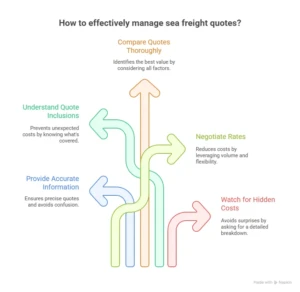
The more specific you are, the more accurate the quote will be. Guessing only leads to confusion later.
Understanding What’s Included in a Quote
Not every quote covers the same things. One company might offer door-to-door delivery, while another only handles the ocean part.
Always check what’s actually included.
Here are the basics:
- Freight charges: The main shipping cost across the sea.
- Origin and destination fees: Loading, unloading, and handling costs at both ports.
- Customs and paperwork: Clearance, taxes, and required documentation.
- Insurance: Optional, but smart. It protects your goods from loss or damage.
If something feels vague, just ask. A good provider won’t dodge your questions.
How to Compare Quotes Effectively
When you’ve got a few quotes, don’t just glance at the price and pick the inexpensive one.
Instead, compare what each one contains.
Example: one quote might look cheaper at first but exclude customs or delivery fees. Another might look slightly higher but covers everything — meaning fewer surprises later.
Create a quick comparison chart if needed. That way, you’ll easily spot which provider gives the best overall value.
Tips to Negotiate Better Freight Rates
Yes, you can negotiate. Freight pricing isn’t always fixed. It often depends on timing, volume, and relationships.
Here’s how to get better rates:
- Ship larger volumes if possible — bigger loads often mean better prices.
- Be flexible with your dates. Avoid peak seasons if you can.
- Stick with one provider; long-term loyalty helps you get benefits.
- Keep up with shipping trends. Fuel prices and demand can affect rates.
Being respectful, clear, and consistent goes further than trying to “haggle.”
Hidden Costs to Watch For
Shipping has a few tricky extras that can catch you off guard.
Here are the regular ones to keep an eye on:
- Demurrage or storage fees: Charged if your container stays too long at the port.
- Customs inspection costs: If your shipment is pulled for checking.
- Documentation mistakes: Wrong info can mean fines or delays.
Ask for a breakdown of all possible charges before you confirm anything. It’s the easiest way to avoid headaches later.
How to Finding Sea Freight Providers
Identify Your Shipping Needs
Start by being honest about what you call for. Are you moving a few boxes or a full container load? Is this a one-time shipment or something regular?
Once you’re clear, it’s easier to find a company that actually fits your situation.
Research and Shortlist Providers
Don’t stop at the first company you find online.
Check reviews, ask around, and visit their website to see what services they offer. Make a shortlist of three to five providers who look experienced and reliable.
Evaluate Experience and Network Reach
Experience matters, especially when things go wrong. An experienced provider knows how to manage customs delays, missing paperwork, or weather-related issues.
Also check their global reach. Do they have partners or offices in the countries you ship to? That makes your journey smoother.
Compare Service Offerings and Capabilities
Some companies are great with small shipments. Others handle massive industrial loads.
Ask what kind of cargo they usually work with. If they’ve handled goods like yours before, that’s a good sign.
Also, ask about tracking tools, delivery options, and how they deal with unexpected delays.
Check Reputation and Reviews
Online reviews give half the story, but your personal experience matters as well.
Are the speed at which they respond to emails high? Are they friendly or vague when you ask questions? Some dependable communication is usually an indicator of dependable service.
Ask the Right Questions
These are the questions you can pose when you are speaking to potential providers:
Which ports do you use this route?
How much time is the trip typically going to take?
What will occur in the event of delay?
How will I track my shipment?
Confidence implies clear answers. In case of hesitation or unwillingness to details do not stop.
Assess Transparency and Communication
There is a lot of coordination involved in shipping. You will desire an provider who keeps you updated, not one who vanishes and goes under the carpet.
When they are articulate and on the offensive that is a high green flag.
Key Factors to Consider When Choosing a Sea Freight Provider
Cost Efficiency
The lowest quote isn’t always the best deal. Look for a fair price that balances cost and quality. You want dependable service without paying for unnecessary extras.
Reliability and Track Record
On-time deliveries, safe cargo handling, and honest communication that’s what reliability looks like. Ask about their history of delays or damages. Good providers will be upfront.
Transit Time and Speed
Some routes take longer, but if timing matters, it’s worth paying a bit more for faster transit. Know your priorities before booking.
Cargo Handling and Safety Measures
Your goods should be packed, loaded, and moved with care. Ask about how they handle fragile, perishable, or high-value items. It says a lot about their professionalism.
Shipping Routes and Port Facilities
Efficient routes mean fewer delays. Check which ports they use and whether those ports are known for quick processing. A well-chosen route can save days or even weeks.
Customs Clearance Expertise
Customs can be confusing — different rules, endless paperwork.
Providers with their own customs experts can help you skip a lot of stress and keep your cargo moving smoothly.
Customer Service and Communication
You’ll want someone who picks up the phone or replies fast when you need help.
Good customer service isn’t a luxury. It’s what keeps you from panicking when things get tricky.
Flexibility and Scalability
Your shipping needs might change. Maybe you start small now but grow later. Choose a provider who can adjust their services as you expand — not one you’ll outgrow in a few months.
Sustainability and Green Shipping Practices
Shipping can impact the environment, but many companies now use cleaner fuel, smart routing, and reusable materials.
Choosing a provider who cares about sustainability shows you’re thinking ahead, not just for your business also for the planet.
Finding the Best Provider for Your Business
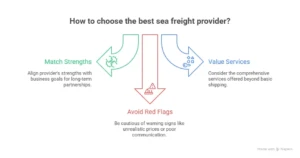
Matching Provider Strengths to Your Goals
Every business has different priorities. May it be speed, budget, customer satisfaction, or consistency.
Pick a provider whose strengths match what matters most to you. That’s how partnerships last.
Why Partnering with the Right Freight Forwarder Matters
A great freight forwarder does more than move containers. They coordinate paperwork, track shipments, handle customs, and fix problems before they reach you.
Basically, they make your job easier — and that’s worth a lot.
Red Flags to Avoid
If something feels off, trust your gut.
Walk away if you notice:
- Prices that seem too low to be real
- Poor or delayed communication
- No clear terms or documents
Shipping is built on trust. Don’t neglect small warning signs.
Conclusion
Shipping by sea can feel confusing the first time you look into it, but it gets a lot easier once you know what to ask and who you can rely on. A good place to start is getting clear quotes, comparing what each company offers, and sticking with a provider who actually talks to you and treats your cargo with care. That’s the approach we follow at TriRoute Shipping — simple, honest, and steady.
When those pieces are in place, the stress fades out. Shipping doesn’t feel messy anymore — it just works, the way it should.
To learn more about Sea Freight , explore our related blog articles!
- Sea Freight Forwarding Guide: Everything You Need to Know
- Types of Sea Freight Shipping
- What is Full Container Load (FCL)
- Step-by-Step Sea Freight Forwarding Process
- What Affects Sea Freight Rates?
- Benefits of Using Sea Freight Forwarding
- Challenges of Sea Freight Forwarding
- Choosing the right sea freight forwarder
- Top Sea Freight Forwarders in the UAE
- Key Documents Involved in Sea Freight Forwarding