
- Key Takeaways
- Understanding Sea Freight Documentation
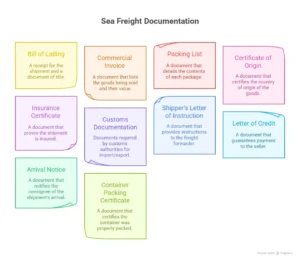
- Documents You’ll Need for Sea Freight Forwarding
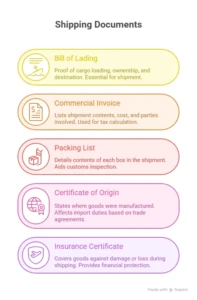
- 1. Bill of Lading (B/L)
- 2. Commercial Invoice
- 3. Packing List
- 4. Certificate of Origin (COO)
- 5. Insurance Certificate
- 6. Customs Documentation
- 7. Shipper’s Letter of Instruction (SLI)
- 8. Letter of Credit (L/C)
- 9. Arrival Notice
- 10. Container Packing Certificate / Dangerous Goods Declaration
- 11. Power of Attorney
- Supporting & Specialised Documents
- Inspection Certificate
- Phytosanitary / Health Certificates
- Fumigation Certificate
- Importer Security Filing (ISF)
- Export / Import Licenses
- The Step-by-Step Documentation Process
- Legal & Compliance Considerations
- Common Mistakes and How to Avoid Them
- The Future of Sea Freight Documentation
- Digital Bill of Lading (e-BL)
- Paperless Customs Processes
- Automated Document Management
- Conclusion
Sea freight isn’t just about loading containers and watching them sail away. Behind every smooth shipment is a stack of Documents Involved in Sea Freight Forwarding — papers that prove what you’re sending, who it belongs to, and where it’s headed. Miss even one form, and your cargo could sit at port longer than a movie marathon. This blog breaks down each essential document, why it matters, and how digital tools make the entire process faster and stress-free.
Key Takeaways
- Sea freight relies on accurate documentation, from the Bill of Lading to customs forms — even one missing detail can delay your shipment for days.
- Every document has a specific role, whether it’s proving ownership, confirming cargo contents, or protecting your shipment with insurance.
- The future is digital, with e-Bills of Lading, online customs submissions, and automated document tools reducing errors and speeding up global trade.
Understanding Sea Freight Documentation
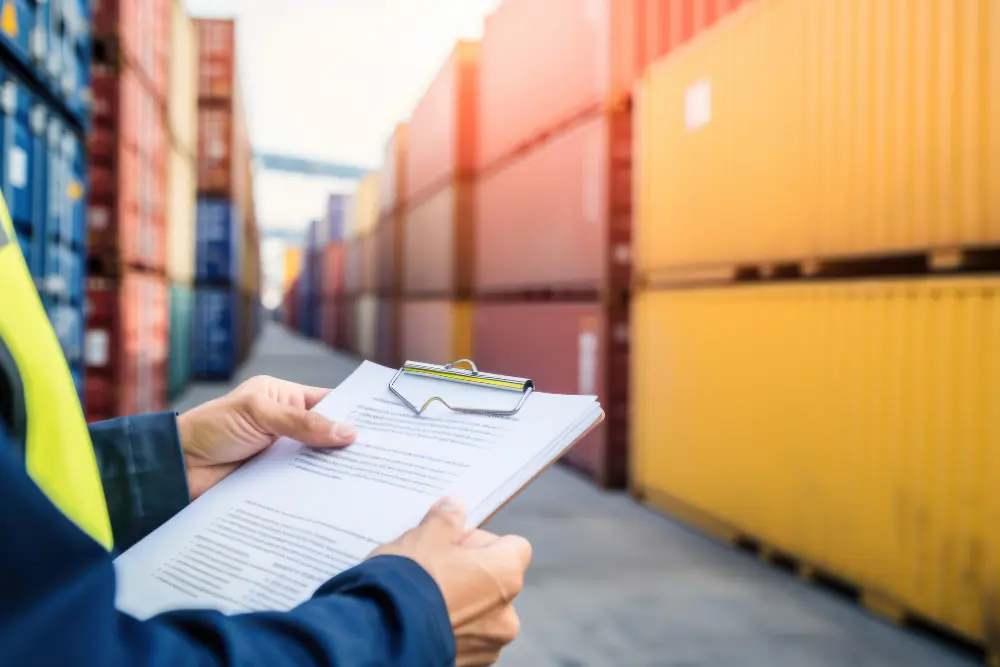
It is not all loading containers in a huge vessel and saying goodbye in order to ship stuff across the ocean. Back of all those seamless deliveries, there is a stack of documents that ensure that all the shipments arrive where they are supposed to.
Imagine you are sending a huge package to a foreign nation – but instead of a tracking number, you have forms which testify that this belongs to someone, what is inside it, and where it is going. The loss of even a single component of that puzzle may mean that your cargo will spend as long in a port as your favorite movie marathon.
Let us discuss what such documents are and why they are important.
Documents You’ll Need for Sea Freight Forwarding
1. Bill of Lading (B/L)
This is the superstar of shipping documents. The Bill of Lading is proof that your cargo’s been loaded on the ship. It also shows who owns the goods and where they’re going.
Think of it as your cargo’s passport — no ship leaves without it. Keep it safe; losing it can delay your shipment big time.
2. Commercial Invoice
This one’s basically the “bill” for your shipment. It lists what you’re sending, how much it costs, and who’s buying it. Customs officers rely on this to calculate taxes and duties, so every number here needs to match your other papers exactly.
3. Packing List
The packing list breaks down what’s inside your shipment — box by box.
Imagine if someone sent you a mystery box with no clue what’s inside. That’s what customs deal with without a packing list. It helps inspectors check cargo quickly and accurately.
4. Certificate of Origin (COO)
This document tells where your goods were made. Why does that matter? Because some countries have trade deals that lower taxes for goods from certain places.
For example, a company in India might pay less duty when exporting tiles to a country it has a trade agreement with.
5. Insurance Certificate
Let’s be real — accidents happen. Rough weather, bumps at the port, even misplaced containers. The insurance certificate shows that your goods are covered if something goes wrong.
It’s like travel insurance, but for cargo.
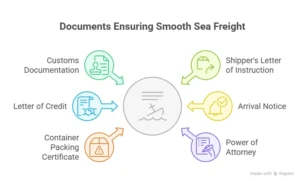
6. Customs Documentation
Every country has its own customs rules. These forms — like export declarations or import entries — prove that your goods are legal, safe, and duty paid.
They’re the reason your shipment gets cleared instead of held up in inspection limbo.
7. Shipper’s Letter of Instruction (SLI)
This one tells your freight forwarder exactly what to do — who to ship to, what services you want, and how to handle your cargo.
It’s your chance to say, “Hey, here’s how I want this done.”
8. Letter of Credit (L/C)
When buyers and sellers don’t know each other well, this document builds trust. It’s a bank’s promise that the seller will get paid once shipping conditions are met.
It keeps both sides safe — no one wants to send goods and not get paid.
9. Arrival Notice
When your cargo reaches its destination, the shipping line sends an arrival notice.
It’s basically a “Hey, your shipment’s here” message with details about where and when to pick it up.
10. Container Packing Certificate / Dangerous Goods Declaration
If you’re shipping something that could be risky — like chemicals — this form proves everything’s packed safely. It keeps the ship, crew, and other cargo protected.
11. Power of Attorney
Sometimes, you let your freight forwarder handle the paperwork.
The Power of Attorney is just a document giving them permission to sign things or file forms for you. It’s like saying, “You’ve got my okay to handle this.”
Supporting & Specialised Documents
Some shipments need extra paperwork depending on what’s inside.
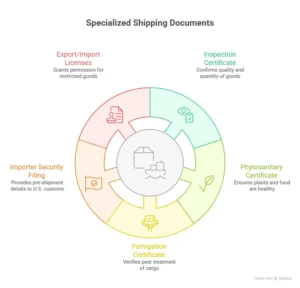
Inspection Certificate
Confirms that your goods were checked for quality or quantity before leaving. Often used for machinery or big industrial items.
Phytosanitary / Health Certificates
Used for plants, seeds, or food products. It proves your goods are clean, healthy, and pest-free.
Fumigation Certificate
If your cargo was treated to remove pests (usually for wooden packaging), this form confirms it’s been done right.
Importer Security Filing (ISF)
Required for shipments heading to the U.S. It gives customs details about what’s coming in before the ship even sails.
Export / Import Licenses
Some goods — like electronics or chemicals — need government approval before being shipped. The license is proof you’ve got that permission.
The Step-by-Step Documentation Process
Here’s how it usually goes:
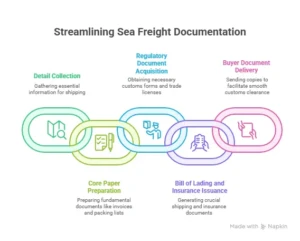
- Collect details — what you’re shipping, where it’s going, and when.
- Prepare core papers — like your invoice, packing list, and shipping instructions.
- Get regulatory documents — such as customs forms or trade licenses.
- Once loaded, issue your Bill of Lading and insurance certificate.
- Send copies to your buyer so they can clear customs smoothly at their end.
Keeping everything organized (and double-checked) saves time and money.
Legal & Compliance Considerations
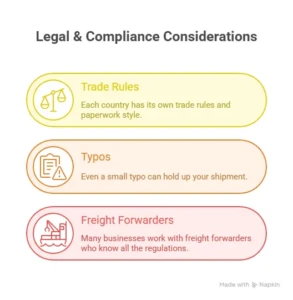
Each country has its own trade rules and paperwork style. Even a small typo — like a missing digit in an invoice or wrong product code — can hold up your shipment.
That’s why many businesses work with freight forwarders who know all the regulations. They make sure your documents are accurate and compliant before the cargo even leaves port.
Common Mistakes and How to Avoid Them
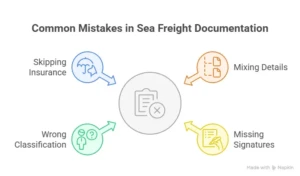
Here are the slip-ups that trip people up most often:
- Mixing up details between documents.
- Forgetting to sign or date forms.
- Using the wrong product classification.
- Skipping insurance to cut costs — and paying the price later.
Before sending anything, take five minutes to double-check every document. A quick review can prevent a week of delays.
The Future of Sea Freight Documentation
The shipping world’s slowly ditching paper — and that’s a good thing.
Digital Bill of Lading (e-BL)
Instead of mailing physical papers, companies now send electronic versions. They’re faster, easier to track, and harder to lose.
Paperless Customs Processes
More ports now accept digital submissions for customs. You can upload forms online instead of waiting in long queues or mailing stacks of papers.
Automated Document Management
Freight companies are using smart tools that spot errors automatically and store all your files safely in one place. It saves time, reduces mistakes, and keeps things running smoothly.
Conclusion
Sea freight paperwork might look intimidating, but once you understand what each document does, it all makes sense. Every form — from the Bill of Lading to the insurance certificate — has a specific role in making sure your cargo travels safely and legally.
Whether you’re a small business sending your first shipment or a large exporter moving containers every week, knowing your paperwork helps everything run smoothly with fewer surprises. And with support from TriRoute Shipping, you get a team that keeps the process clear and steady from start to finish.
To learn more about Sea Freight Forwarding, explore our related blog articles!
- Sea Freight Forwarding Guide: Everything You Need to Know
- Types of Sea Freight Shipping
- What is Full Container Load (FCL)
- Step-by-Step Sea Freight Forwarding Process
- What Affects Sea Freight Rates?
- Benefits of Using Sea Freight Forwarding
- Challenges of Sea Freight Forwarding
- Choosing the right sea freight forwarder
- Top Sea Freight Forwarders in the UAE
- Getting a Quote & Finding Sea Freight Providers