
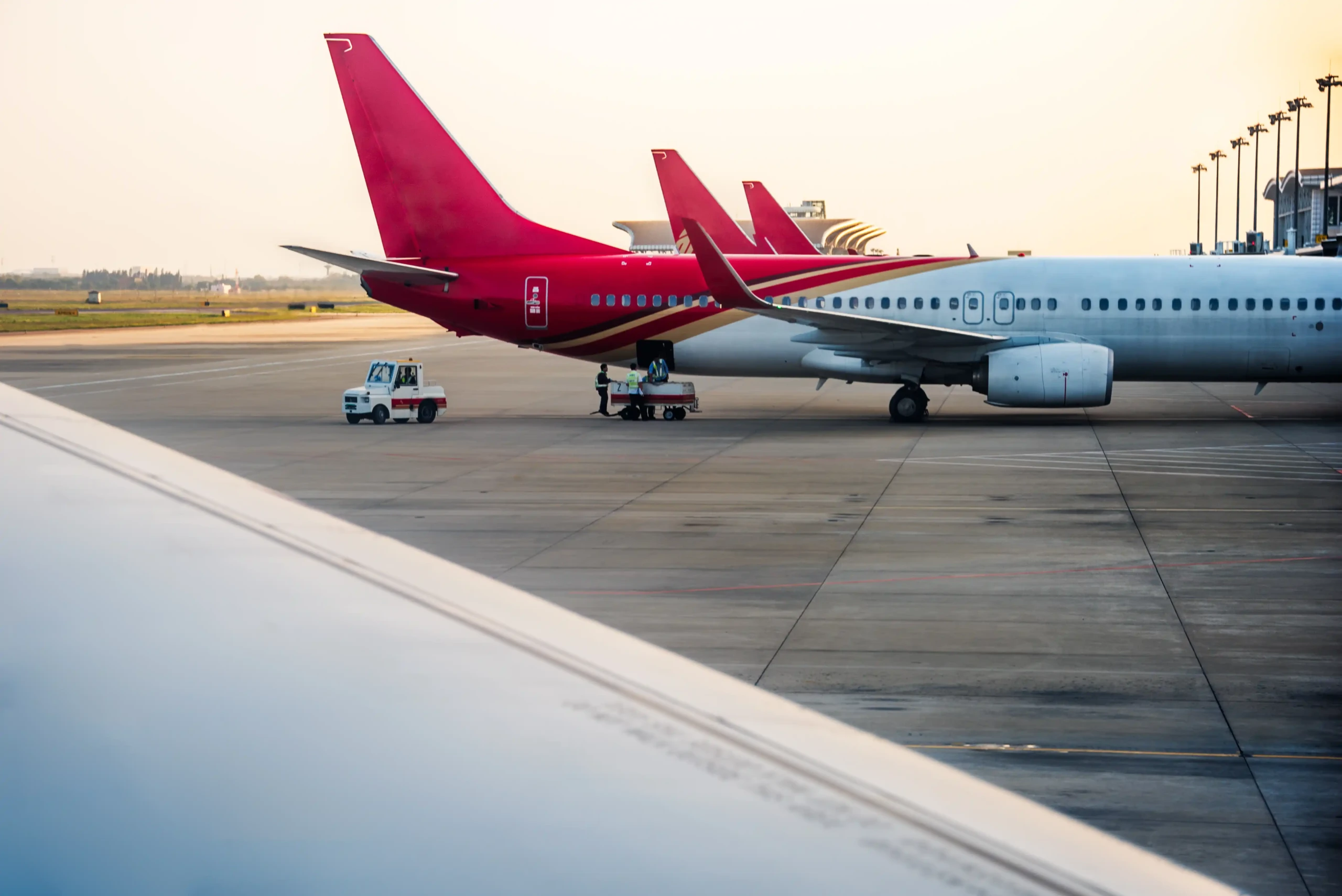
When time is money, air freight forwarding keeps global trade moving fast. Imagine sending goods halfway across the world and having them arrive in just a few days — that’s the power of air shipping. If you are transporting only a few boxes or large volumes of goods, the use of air freight will enable you to reach worldwide markets in a fast, safe and accurate way. This is the process and the main reason why a great number of shippers decide to use it.
- Key Takeaways
- Understanding Air Freight Forwarding
- How Air Freight Forwarding Works — Step by Step
- 1. Shipment Pickup
- 2. Documentation Preparation
- 3. Cargo Consolidation & Packaging
- 4. Booking Air Space
- 5. Customs Clearance
- 6. Transit & Tracking
- 7. Delivery & Proof of Receipt
- Advantages of Air Freight Forwarding
- Types of Air Freight Services
- Air Freight Forwarding vs. Air Express — What’s the Difference?
- Cost Considerations in Air Freight Forwarding
- Key Documents Required for Air Freight Forwarding
- Common Challenges & How to Overcome Them
- Choosing the Right Air Freight Forwarder
- Why Partner with TriRoute Shipping for Air Freight Forwarding
- Conclusion
Key Takeaways
- Air freight forwarding delivers speed, safety, and global reach for time-sensitive cargo.
- Choosing the right forwarder ensures smooth customs clearance and fewer delays.
- TriRoute Shipping provides reliable, tech-driven air freight services trusted by businesses worldwide.
Understanding Air Freight Forwarding
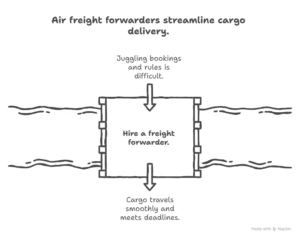
Air freight forwarding is like having a personal travel agent for your cargo. The freight forwarder is your one-stop service who takes care of everything – the pickup, the documentation, customs, and final delivery.
Instead of juggling airline bookings and international rules yourself, they manage it all so your shipment travels smoothly.
When products need to be delivered quickly, safely, or meet a deadline that is too tight, companies often opt for air freight. For instance, with electronics, medical equipment, or fashion samples that cannot be left waiting at sea for weeks.
How Air Freight Forwarding Works — Step by Step

1. Shipment Pickup
It starts with collecting goods from your warehouse or supplier. The forwarder inspects the packaging, confirms the details, and prepares the shipment for delivery.
2. Documentation Preparation
In the shipping world, paperwork holds a lot of power. It is the forwarder that prepares all the documents, such as invoices, air waybills, and customs forms, ready for the smooth and speedy flying of your cargo.
3. Cargo Consolidation & Packaging
Smaller shipments may be grouped with others heading the same way. This helps save space and cost. Proper packing keeps everything secure during flight.
4. Booking Air Space
Your forwarder books space on a commercial or cargo aircraft. They choose the best flight depending on timing, cargo type, and cost.
5. Customs Clearance
Before takeoff, the forwarder works with customs to get approvals. This ensures your goods can legally leave the country and enter their destination.
6. Transit & Tracking
Once airborne, your shipment is tracked in real time. You can see updates at each stage — takeoff, landing, and arrival.
7. Delivery & Proof of Receipt
At the destination, customs are cleared again, and the goods are delivered to the final address. You receive proof of delivery — closing the loop neatly.
Advantages of Air Freight Forwarding
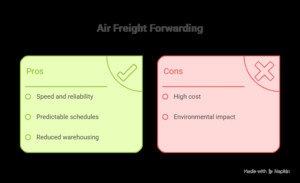
Air freight forwarding is all about speed and reliability. Basically, it is the fastest method to transport things across the globe and involves very strict security measures.
On top of that, you have enhanced predictability as well – since the flights operate on fixed schedules, you can be exact with your arrival time planning.
For time-sensitive or high-value cargo, that reliability matters more than anything.
It also reduces the need for warehousing since goods move quickly through supply chains instead of sitting idle in storage.
Types of Air Freight Services
| Type of Air Freight Service | Ideal For | Key Features | Best Suited Industries |
| Standard Air Freight | Regular shipments that are time-sensitive but not urgent. | Scheduled flights, fixed transit times, cost-effective for planned deliveries. | Manufacturing, retail, automotive. |
| Express or Expedited Air Freight | Urgent or last-minute shipments needing the fastest delivery. | Priority handling, guaranteed flight space, next-flight-out options. | Healthcare, electronics, e-commerce. |
| Consolidated or Groupage Air Freight | Smaller shipments that don’t fill a container. | Shared cargo space, lower costs, slightly longer transit. | SMEs, fashion, light industrial goods. |
| Charter Air Freight | Oversized, high-value, or urgent cargo needing dedicated aircraft. | Custom flights, flexible routes, special handling. | Oil & gas, defense, project cargo, humanitarian aid. |
How to read this table:
If your cargo is small, consolidated air freight saves money. If it’s urgent or specialized, go for express or charter. The right choice depends on your timeline, budget, and cargo type.
Air Freight Forwarding vs. Air Express — What’s the Difference?
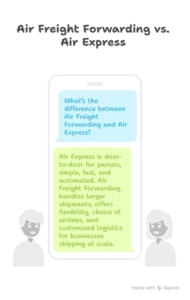
They sound similar, but they serve different needs.
Air Express is door-to-door and perfect for parcels or small packages. It’s simple, fast, and often automated.
Air Freight Forwarding handles larger shipments, multiple pallets, or even full aircraft loads. It offers flexibility, choice of airlines, and customized logistics — perfect for businesses shipping at scale.
Cost Considerations in Air Freight Forwarding
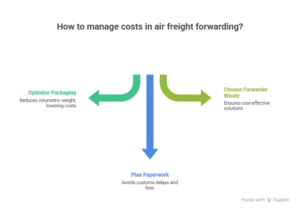
Air freight costs depend on chargeable weight — whichever is higher between the actual and volumetric weight. On top of that, you have handling fees, a fuel surcharge, and customs charges.
It may be complicated, but a good forwarder will assist you in planning your packaging and paperwork so that the expenses are kept at a minimum. An air shipment is more expensive than a sea shipment, but if you are in a hurry, it is definitely worth it.
Key Documents Required for Air Freight Forwarding
| Document | Purpose |
| Air Waybill (AWB) | The main document — acts as a transport contract and cargo receipt. |
| Commercial Invoice | Shows the sale value of goods for customs clearance. |
| Packing List | Details what’s inside each box or pallet. |
| Certificate of Origin | Confirms where the goods were made. |
| Export Declaration | Required for customs authorization before departure. |
| Insurance Certificate | Protects against loss or damage during flight. |
Getting these right saves hours — even days — at customs.
Common Challenges & How to Overcome Them
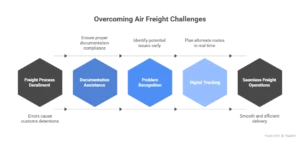
Air freight is quick, but errors can derail the entire process. Without the proper documentation, incorrect labelling, or inadequate packaging, consignments may be detained in customs. A professional forwarding agent is surely a great support to make the operations proceed seamlessly. They can recognize problems which are still insignificant but will turn into serious issues if not addressed in time.
Weather delays or airport congestion can happen too, but digital tracking helps you plan alternate routes or updates in real time.
Choosing the Right Air Freight Forwarder

Look for a forwarder that’s experienced, transparent, and easy to reach. They should handle everything from pickup to customs with regular updates.
Ask about their airline network, tracking tools, and response time. A reliable forwarder feels like a partner — not just a service provider.
Why Partner with TriRoute Shipping for Air Freight Forwarding

TriRoute Shipping makes air freight stress-free. The team combines experience, technology, and real-time communication to keep shipments moving fast and secure.
From medical equipment to industrial parts, TriRoute tailors every solution around timing, cost, and safety. With global connections and strong customer support, your cargo is in trusted hands from the runway to your doorstep.
Conclusion
Air freight forwarding is the fastest way to connect businesses across borders. It’s quick, safe, and dependable when you can’t afford to wait.
With the right forwarder — like TriRoute Shipping — every shipment is handled with care, speed, and precision. It’s logistics made simple, even when the world feels complex.