
Air freight is fast, reliable, and great for urgent shipments. However, the price can feel confusing if you’re not familiar with how it’s calculated. One week, the rate looks manageable, and the next week it jumps without warning. The positive side is that air freight prices are indeed quite logical. When you figure out the key elements that influence the costs, it is way easier and less stressful to organize your shipments.
- Key Takeaways
- Understanding How Air Freight Rates Are Calculated
- Chargeable Weight (Volumetric vs Actual Weight)
- Freight Class and Commodity Type
- Carrier Pricing Models (Classical, Dynamic, Spot Pricing)
- Key Factors That Affect Air Freight Rates
- 1. Weight and Dimensions of Cargo
- 2. Transportation Route & Distance
- 3. Type of Cargo Being Shipped
- 4. Shipment Mode (Standard, Express, Consolidated, Charter)
- 5. Seasonality & Market Demand
- 6. Fuel Prices & Surcharges
- 7. Customs & Regulatory Requirements
- 8. Special Handling Requirements
- 9. Carrier Capacity & Competition
- 10. Technology & Operational Efficiency
- Additional Hidden Charges Shippers Often Miss
- How to Reduce Air Freight Costs (Practical Tips)
- Why Air Freight Rates Change Frequently
- Air Freight vs Other Transport Modes: Cost Differences
- Air vs Sea
- Air vs Road
- Air vs Rail
- Conclusion
Key Takeaways
- Air freight rates depend on weight, route, timing, and cargo type.
- Hidden airport and handling fees can add up if not monitored.
- Planning ahead and working with a reliable forwarder keeps costs under control.
Understanding How Air Freight Rates Are Calculated
Chargeable Weight (Volumetric vs Actual Weight)
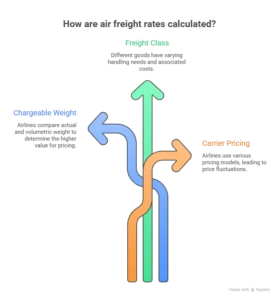
Air freight pricing starts with “chargeable weight.” Airlines compare the shipment’s actual weight with its volumetric (size-based) weight. Whichever number is higher is used for pricing. This prevents large but lightweight boxes from taking up space for cheap.
Freight Class and Commodity Type
Different goods have different handling needs. Electronics, perishables, and dangerous goods all have their own pricing classes. The more sensitive or regulated the cargo, the higher the cost.
Carrier Pricing Models (Classical, Dynamic, Spot Pricing)
Airlines use a mix of traditional pricing (classic contracts), fast-changing dynamic pricing, and spot rates based on last-minute capacity. This is why the same lane can have different prices during the same week.
Key Factors That Affect Air Freight Rates

1. Weight and Dimensions of Cargo
Bigger and heavier shipments will cost you more as they take up more space in the aircraft. Even light items can become quite expensive if it is bulky.
2. Transportation Route & Distance
Busy routes cost less because there’s more capacity. Remote or low-demand routes cost more because airlines fly them less often.
3. Type of Cargo Being Shipped
Fragile, hazardous, perishable, or high-value cargo needs careful handling, special packaging, or temperature control — all of which increase the rate.
4. Shipment Mode (Standard, Express, Consolidated, Charter)
Express and charter services cost more because of priority space or dedicated flights. Consolidated cargo is usually cheaper but slightly slower.
5. Seasonality & Market Demand
Peak periods like holidays, festival seasons, and harvest months drive up air freight prices because aircraft space becomes limited.
6. Fuel Prices & Surcharges
When fuel prices climb, airlines add fuel surcharges. These can rise or fall quickly and affect the final cost noticeably.
7. Customs & Regulatory Requirements
Some shipments require extra checks, permits, or inspections. These add time and cost to the overall process.
8. Special Handling Requirements
Cargo that needs cooling, special packaging, escorts, or added security will cost more because it takes extra resources to manage safely.
9. Carrier Capacity & Competition
If airlines have limited space, rates climb. When more carriers operate on the route, prices tend to drop.
10. Technology & Operational Efficiency
Forwarders and airlines which are on the forefront with their systems and automation usually have lower prices in their offer as they minimize the manual work and the occurrence of handling errors.
Additional Hidden Charges Shippers Often Miss
| Charge Type | What It Means | Why It Adds to Your Cost |
| Security Fees | Covers airport safety checks, scanning, and clearance before loading. | Airports are very strict in following the regulations, and every shipment needs to go through multiple inspection layers. These inspections are compulsory and have a separate fee for each shipment. |
| Terminal Handling Charges (THC) | Fees for the labor and equipment used inside the cargo terminal. | Terminals handle unloading, pallet movement, storage, and prepping cargo for flights. You pay THC at both origin and the destination. |
| Airport Storage Fees | Daily charges for cargo left at the airport longer than allowed. | Delays in paperwork or customs can keep cargo on hold, and storage fees build up quickly during those extra days. |
| Screening Fees | Costs for scanning, manual checks, and safety inspections of cargo. | All air cargo must be screened. Large or odd-shaped shipments often need extra screening, which increases the fee. |
| Documentation Fees | Charges for preparing and processing air freight documents. | Air Waybills, declarations, packing lists, and special certificates take time to prepare. More documents = higher fees. |
| Fuel & Emergency Surcharges | Extra fees related to fuel changes and unexpected operational issues. | Fuel prices shift often. Airlines also add emergency charges for weather delays, rerouting, or sudden capacity issues. |
How to Reduce Air Freight Costs (Practical Tips)
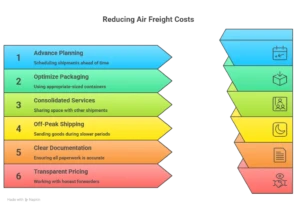
It is possible to reduce your air freight costs if you plan well in advance, do not use oversized packaging, take consolidated services if timing is not a problem, and send goods during the off-peak periods. Clear documentation also prevents delays that lead to extra charges. Working with a forwarder who offers transparent pricing helps you avoid surprises.
Why Air Freight Rates Change Frequently

One of the ways airlines adjust prices is based on fuel, demand, weather, airport congestion, and global events. Their air freight business is also a very fast-moving one, so they have to shift their rates quickly sometimes even daily. Understanding these patterns allows you to make a booking at the right time and have better control of your budget.
Air Freight vs Other Transport Modes: Cost Differences
Air vs Sea
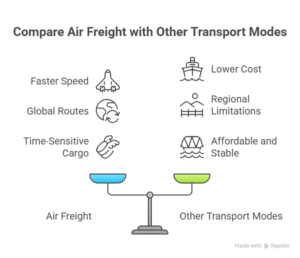
Air is faster but costs more. Sea is slower but far cheaper for large shipments.
Air vs Road
Road works well for short distances. Air becomes necessary when speed matters or when crossing borders quickly.
Air vs Rail
Rail is affordable and stable, but limited to certain regions. Air works for global routes and time-sensitive cargo.
Conclusion
At times, it may seem that the cost of air freight is changing without any pattern, but after you figure out what is causing the cost the most – weight, routes, fuel, demand, and handling needs – it becomes understandable. By selecting a suitable partner, it is possible to pick the most efficient service for your cargo and keep your expenses at bay.
TriRoute Shipping is the solution that brings ease to business freight movements through clear processes, constant communication, and rates that reflect practical scenarios.
To learn more about air freight services, explore our related blog articles!