
Deciding in which way the products should be shipped globally is very crucial. Actually, it is much more than simply transferring a box from one place to another; It involves safeguarding your margins, satisfying the demand of your customers, and ensuring the smooth functioning of your supply chain without any disruptions.
- Key Benefits of Using Air Freight Forwarding
- The fastest way to move goods
- Reliable schedules you can trust
- Reach any destination on the globe
- Tight security for your peace of mind
- Lower insurance costs
- Cut your warehousing and inventory costs
- Simpler packaging requirements
- Total visibility on your shipment
- Bounce back from supply chain disruptions
- Perfect for perishables and high-tech goods
- Types of Shipments Best Suited for Air Freight Forwarding
- Air Freight vs. Other Shipping Methods
- Air Freight vs. Sea Freight
- Air Freight vs. Road Freight
- When air freight is the clear winner
- Operational Advantages of Using an Air Freight Forwarder
- Considerations Before Choosing Air Freight Forwarding
- Conclusion
- FAQs
- Is air freight suitable for small businesses?
- How much faster is it than sea freight?
- Is air freight more secure?
- Are there things I can’t ship by air?
Sea freight is usually considered the go-to option for most people, however, if you want to be really precise and quick, air freight is the only method that can really deliver those requirements.
Key Benefits of Using Air Freight Forwarding

The fastest way to move goods
If your business depends on speed, air freight is the only way to go. It is the quickest path for international transport. When sea freight takes weeks or even months, planes get the job done in a matter of days. This speed helps you hit tight deadlines and keeps your inventory turning over quickly.
Reliable schedules you can trust
Airlines run on incredibly tight schedules. Flights depart frequently—often hourly between major hubs. Even if a flight is delayed, your cargo usually gets on the next one shortly after. This consistency makes it much easier to plan your operations because you aren’t stuck waiting days or weeks for the next available departure.
Reach any destination on the globe
Most airlines have a massive network that covers small cities and major hubs alike. This means you can ship goods almost anywhere. By using air freight, you can often land your products much closer to your final customer than a massive container port would allow, saving you time on the “last mile” of delivery.
Tight security for your peace of mind
Airports are some of the most highly regulated and secure places on earth. Your cargo undergoes strict screening and spends very little time sitting in a warehouse. Because the journey is fast and the handling is professional, the risk of theft or damage is significantly lower than with other shipping methods.
Lower insurance costs
Short transit times mean less risk for your goods. Insurance companies recognize this. Since your products are in transit for a much shorter window, you can often secure lower premiums. Over time, these savings on insurance can help offset the higher cost of the air freight itself.
Cut your warehousing and inventory costs
When you can ship goods in a couple of days, you don’t need to keep a massive amount of “safety stock” sitting in a warehouse. You can adopt a more flexible inventory model, ordering exactly what you need when you need it. This keeps your cash flow healthy and reduces the money you spend on storage fees.
Simpler packaging requirements
Shipping by sea often requires heavy, expensive crating to handle rough waves and potential moisture. Air travel is a much smoother ride. You can use lighter, standard packaging. This doesn’t just save you money on packing materials; it also reduces the total weight of your shipment, which lowers your costs.
Total visibility on your shipment
Most air forwarders provide comprehensive, up-to-the-minute tracking services. There is no question as to the location of your cargo or its time of arrival. You get to see the whole trip which in return enables you to give your customers precise updates and gain their trust in a more efficient way.
Bounce back from supply chain disruptions
When a port strike happens or a natural disaster blocks a shipping lane, sea freight can stay clogged for months. Air freight allows you to fly right over those problems. It is the best tool for bypassing bottlenecks and keeping your supply chain moving when things go wrong elsewhere.
Perfect for perishables and high-tech goods
Some items lose value every hour they spend in transit. Whether it’s fresh produce, life-saving medicine, or the latest smartphone, air freight ensures these products arrive in peak condition. It’s the go-to choice for anything that has a short shelf life or high market demand.
Types of Shipments Best Suited for Air Freight Forwarding
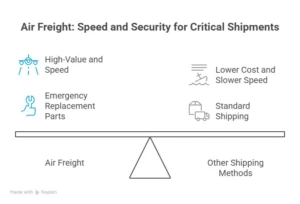
Air freight is a strategic tool, not just a luxury. It is most effective for high-value electronics, luxury fashion, and pharmaceuticals where security and speed are the top priorities. It’s also the best choice for emergency replacement parts. If a machine in your factory breaks down and every hour of downtime costs you thousands, putting a spare part on a plane is a no-brainer.
Air Freight vs. Other Shipping Methods
Air Freight vs. Sea Freight
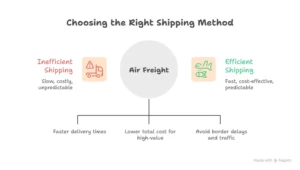
Sea freight is the king of bulk. If you’re moving tons of low-value goods, ships are cheaper. But for everything else, you have to look at the total cost. When you factor in the speed, lower insurance, and reduced warehousing, air freight is often more cost-effective for smaller, high-value loads.
Air Freight vs. Road Freight
Trucks are great for domestic moves. However, for international hauls, trucks face border delays, traffic, and geographical limits. Planes fly over those obstacles, offering a level of predictability that road transport just can’t guarantee.
When air freight is the clear winner
If the primary objective is to get a product ahead of a competitor in the market, or if you are transporting delicate or costly items, choosing air freight is the most suitable decision. It mainly concerns the value of your time and the assurance that your products will be delivered at the exact time you require them.
Operational Advantages of Using an Air Freight Forwarder
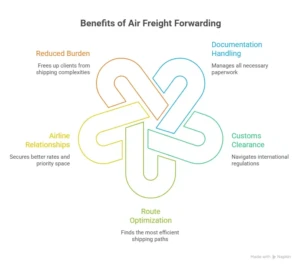
International shipping creates a lot of complications, but a professional air freight forwarder will take the burden off your shoulders. They take care of all the documentation, customs clearance, and figuring out the most direct way to get the goods. Your major airlines relationship with them will not only get you better rates but also priority space on the flights which you usually cannot access on your own.
Considerations Before Choosing Air Freight Forwarding
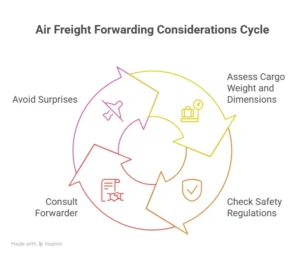
Before you commit, take a look at your cargo’s weight and dimensions. Air freight is priced based on a “chargeable weight” (a mix of actual weight and volume), so bulky items can be expensive. You should also check for any safety regulations regarding your items. A quick conversation with your forwarder can help you avoid any surprises at the airport.
Conclusion
Air freight is not only a quick method of moving cargo; it is indeed a means of optimizing your business operations. With reduced transit times and enhanced security, you will be able to concentrate on brand development and customer satisfaction rather than on shipment delays or losses.
Ready to see how air freight can speed up your business? Get started with a quote from Triroute Shipping for your next shipment today.
FAQs
Is air freight suitable for small businesses?
Absolutely. It’s often the best way for smaller companies to move high-value products without having to wait weeks for a sea container to arrive.
How much faster is it than sea freight?
It’s a massive difference. Air freight typically takes 1 to 5 days, while sea freight can take anywhere from 3 to 6 weeks depending on the destination.
Is air freight more secure?
Yes. Security at airports is far stricter compared to sea ports, and since the goods are in transit for a shorter time, there are fewer chances of damage and theft.
Are there things I can’t ship by air?
Yes. Very heavy or low-value items like coal or large quantities of liquid aren’t usually cost-effective. Also, certain hazardous materials and batteries have strict safety rules for flights.