
Key Takeaways
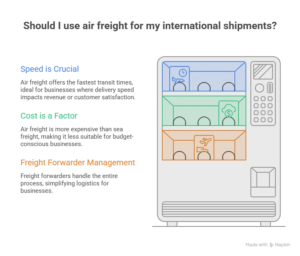
- Air freight is the fastest and most reliable freight mode available — but it comes at a significant cost premium that only makes sense when speed has real financial or operational value.
- The right freight mode depends on urgency, cargo type, budget, and total landed cost — not just the headline freight rate. Include inventory holding costs, warehousing, and delivery impact in the calculation.
- Most businesses benefit from using both air and sea freight strategically — choosing the mode that fits each shipment rather than applying a single approach across all cargo.
- Key Takeaways
- What Is Air Freight?
- Advantages of Air Freight
- Speed and Fast Transit Times
- Reliability and Schedule Consistency
- Shipment Visibility and Tracking
- Enhanced Security and Lower Risk of Damage
- Reduced Need for Warehousing
- Disadvantages of Air Freight
- Higher Cost Compared to Sea and Road Freight
- Weight and Size Restrictions
- Environmental Impact
- Limited Capacity for Bulk or Heavy Goods
- Dependency on Weather and Airport Operations
- Factors to Consider When Choosing Your Freight Method
- Urgency and Delivery Timeline Requirements
- Nature, Size, and Weight of Your Cargo
- Budget and Total Landed Cost
- Destination and Route Availability
- Regulatory and Customs Requirements
- Sustainability and Environmental Goals
- When Should Businesses Choose Air Freight?
- Time-Sensitive or High-Value Goods
- Perishables, Pharmaceuticals, and Temperature-Sensitive Cargo
- Emergency Restocking or Supply Chain Disruptions
- When Inventory Holding Costs Outweigh Air Freight Premiums
- Frequently Asked Questions
- What is the difference between air freight and sea freight?
- Is air freight or sea freight cheaper?
- Which is better — air freight or sea freight?
- What are the advantages of air transport over sea transport?
- Why choose air freight over sea freight?
- Conclusion
Air freight isn’t right for every shipment. But when it is right, nothing else comes close.
Speed, reliability, and security make air freight the go-to option for time-sensitive cargo. The trade-off is cost — and for bulk or heavy goods, that trade-off rarely makes sense.
This guide breaks down the real advantages and disadvantages of air freight, and helps you decide when it’s the right call for your business.
What Is Air Freight?
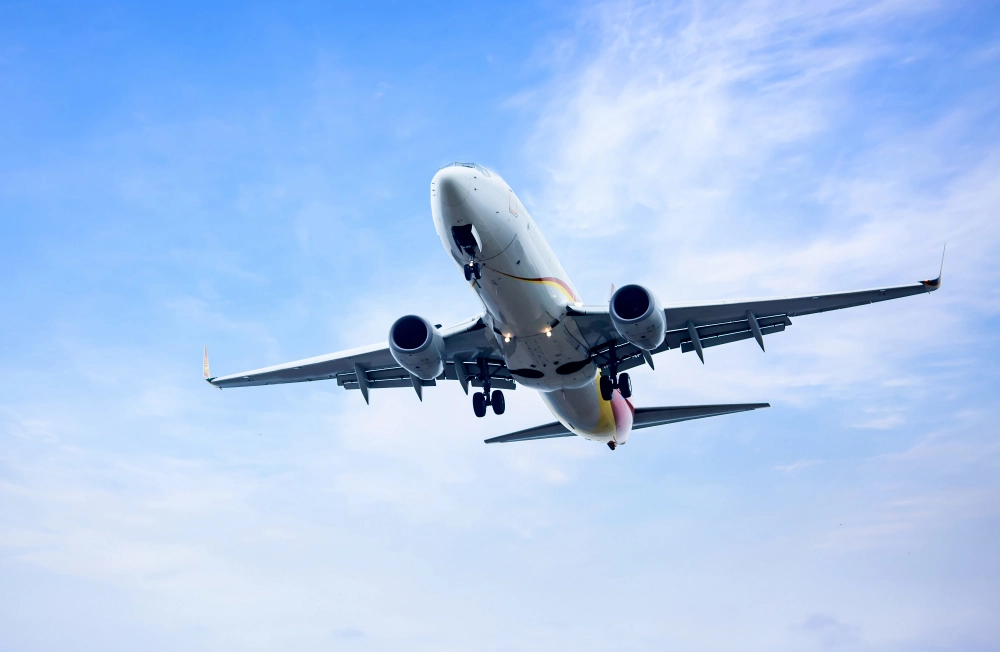
Air freight is the transportation of goods by aircraft — either on dedicated cargo planes or in the belly hold of passenger aircraft.
It’s the fastest mode of international freight available. Transit times that take weeks by sea take days by air. For businesses where delivery speed directly affects revenue, customer relationships, or operational continuity, that speed is worth paying for.
Air freight is handled through a network of cargo airlines, freight forwarders, and airport cargo facilities. A freight forwarder typically manages the end-to-end process — booking cargo space, handling documentation, coordinating customs clearance, and arranging final delivery.
Advantages of Air Freight

Speed and Fast Transit Times
Air freight is the fastest way to move goods internationally. Where sea freight takes weeks, air freight typically delivers in one to five days depending on origin, destination, and routing.
For businesses with tight delivery windows, time-sensitive products, or customers who won’t wait — speed is the primary reason to choose air every time.
Reliability and Schedule Consistency
Airlines operate on fixed schedules with a high degree of consistency. Departure and arrival times are predictable in a way that sea freight — subject to port congestion, vessel delays, and weather disruptions at sea — simply isn’t.
That schedule reliability makes supply chain planning easier and reduces the buffer stock businesses need to hold to protect against late deliveries.
Shipment Visibility and Tracking
Air freight offers excellent shipment visibility. Most carriers and freight forwarders provide real-time tracking from departure to arrival.
You know where your cargo is at every stage of the journey. That visibility reduces uncertainty, supports accurate delivery communication with customers, and makes it easier to respond quickly when anything changes.
Enhanced Security and Lower Risk of Damage
Airport cargo facilities operate under strict security protocols. Goods spend far less time in transit compared to sea freight — reducing exposure to handling, moisture, and other risks.
Cargo damage and theft rates are significantly lower for air freight than for sea or road alternatives. For high-value goods, fragile products, or cargo where damage costs would be substantial, that security premium has real financial value.
Reduced Need for Warehousing
Fast transit times mean goods arrive quickly and move through the supply chain without sitting in storage for extended periods.
That reduces warehousing requirements, cuts inventory holding costs, and frees up working capital that would otherwise be tied up in stock. For businesses managing tight cash flow, the speed of air freight can offset a significant portion of its cost premium.
Disadvantages of Air Freight

Higher Cost Compared to Sea and Road Freight
Air freight is expensive. Significantly more expensive than sea freight for equivalent cargo. The cost per kilogram is higher, and additional charges — fuel surcharges, security fees, handling charges — add up quickly.
For low-value goods or high-volume bulk cargo, the cost premium is rarely justifiable. Air freight makes financial sense when the value of speed outweighs the cost of flying.
Weight and Size Restrictions
Aircraft have strict limitations on cargo weight and dimensions. Oversized, heavy, or awkwardly shaped cargo simply can’t fly — or requires specialist charter arrangements that push costs even higher.
Sea freight handles cargo that air simply cannot accommodate. For bulk commodities, heavy machinery, or large industrial equipment, sea or road is the only viable option regardless of urgency.
Environmental Impact
Air freight has a significantly higher carbon footprint than sea freight per tonne of cargo moved. For businesses with sustainability commitments or carbon reduction targets, that environmental cost is a real factor in freight mode decisions.
As emissions reporting requirements grow and carbon pricing evolves, the environmental cost of air freight is becoming a more prominent part of the total cost calculation.
Limited Capacity for Bulk or Heavy Goods
Beyond the physical restrictions, air cargo capacity is simply smaller than sea freight capacity by orders of magnitude. High-volume shippers or businesses moving bulk commodities don’t have the option of shifting significant volumes to air — the capacity isn’t there.
Air freight works best for smaller, high-value consignments. It’s not a mass-market freight solution.
Dependency on Weather and Airport Operations
While air freight is more reliable than sea freight in normal conditions, it’s vulnerable to disruption in different ways. Severe weather, airport strikes, technical issues, and slot restrictions can all cause delays — sometimes without warning.
These disruptions tend to be shorter than sea freight delays, but they can cascade across connected flights and routes in ways that create real problems for time-critical supply chains.
Factors to Consider When Choosing Your Freight Method

Urgency and Delivery Timeline Requirements
The first question is always — how fast does this need to get there? If the answer is days rather than weeks, air is likely your only viable option. If timeline flexibility exists, sea freight’s cost advantage becomes much more relevant.
Nature, Size, and Weight of Your Cargo
Light, compact, high-value goods are natural candidates for air freight. Heavy, bulky, or low-value goods are almost never economical to fly. Know your cargo’s characteristics before evaluating freight modes.
Budget and Total Landed Cost
Air freight cost needs to be assessed as part of total landed cost — including the value of reduced warehousing, lower inventory holding, and the revenue impact of faster delivery.
A shipment that costs more to fly but arrives two weeks earlier might be the financially correct decision when all costs and benefits are included.
Destination and Route Availability
Not every destination has direct air cargo connections. Shipments to secondary markets may require transshipment through a hub — adding time and cost. Check route availability and transit times for your specific origin and destination before committing.
Regulatory and Customs Requirements
Some goods face specific regulatory requirements for air transport. Dangerous goods, pharmaceuticals, and certain food products have strict IATA classification and documentation requirements. Make sure your freight forwarder has the relevant expertise for your cargo type.
Sustainability and Environmental Goals
If your business has committed to carbon reduction targets or sustainability reporting, freight mode selection is part of that picture. Sea freight produces significantly lower emissions per tonne of cargo. For businesses where environmental impact is a genuine priority, that difference matters.
When Should Businesses Choose Air Freight?

Time-Sensitive or High-Value Goods
Electronics, luxury goods, fashion, and high-value components all benefit from air freight. The faster they arrive, the sooner they generate revenue — and the lower the risk of loss, damage, or obsolescence in transit.
When the value of the goods or the cost of delay exceeds the air freight premium, flying is the right decision.
Perishables, Pharmaceuticals, and Temperature-Sensitive Cargo
Fresh produce, flowers, seafood, vaccines, and temperature-sensitive pharmaceuticals have a shelf life that sea freight transit times simply don’t accommodate.
Air freight — with specialist temperature-controlled handling at cargo facilities — is often the only viable mode for these products. The choice isn’t air versus sea. It’s air or nothing.
Emergency Restocking or Supply Chain Disruptions
When a production line has stopped because a critical component hasn’t arrived, or when a retail operation has run out of a key product ahead of peak season — air freight pays for itself in the disruption it prevents.
Emergency shipments are exactly the scenario air freight is built for. The cost is high, but the cost of the alternative is usually higher.
When Inventory Holding Costs Outweigh Air Freight Premiums
Businesses that carry large inventories to buffer against slow sea freight transit times pay a real cost — in warehousing, tied-up capital, and obsolescence risk.
Switching to air freight on fast-moving lines can reduce inventory requirements significantly. When the saving in holding costs exceeds the additional freight cost, air freight is the financially rational choice even for goods that aren’t traditionally considered air freight candidates.
Frequently Asked Questions
What is the difference between air freight and sea freight?
Air freight moves goods by aircraft — fast, expensive, and limited by weight and size. Sea freight moves goods by ship — slower, significantly cheaper, and capable of handling bulk and oversized cargo. The right choice depends on urgency, cargo type, and budget.
Is air freight or sea freight cheaper?
Sea freight is almost always cheaper per unit of cargo. Air freight costs significantly more — but the total cost calculation changes when you factor in inventory holding costs, warehousing, and the value of faster delivery. For time-sensitive or high-value goods, air freight can be the more cost-effective option overall.
Which is better — air freight or sea freight?
Neither is universally better. Air freight is better when speed, security, and reliability are the priority. Sea freight is better when cost and volume are the deciding factors. Most businesses use both — choosing the mode that fits each shipment’s specific requirements.
What are the advantages of air transport over sea transport?
Faster transit times, better shipment visibility, higher security standards, lower damage rates, and more consistent scheduling. Air freight also reduces the need for safety stock and warehouse space, which has real financial value for businesses managing inventory carefully.
Why choose air freight over sea freight?
When the cost of delay exceeds the cost of flying. For time-sensitive goods, perishables, high-value cargo, emergency restocking, or situations where inventory holding costs are significant, air freight delivers value that sea freight cannot match — regardless of the headline cost difference.
Conclusion
Air freight is a powerful tool. It’s not the right tool for every shipment — but when speed, security, and reliability matter, it’s often the only tool that works.
The decision comes down to a straightforward calculation. What is the cost of flying versus the cost of not flying? When delay means lost sales, a stopped production line, or spoiled goods — air freight pays for itself.
For most businesses, the right answer is a combination of modes. Sea freight for bulk, stable inventory. Air freight for time-sensitive, high-value, or emergency shipments.
At Triroute Shipping, we help businesses make that calculation accurately — and arrange the right freight solution for each shipment, whether that’s air, sea, or a combination of both.
To learn more about air freight forwarding, explore our related blog articles!
- Air Freight Forwarding Guide
- What is Air Freight Forwarding?
- Types of Air Freight Shipping
- Step-by-Step Air Freight Forwarding Process
- What Affects Air Freight Rates?
- Benefits of Using Air Freight Forwarding
- Challenges of Air Freight Forwarding
- Things to Consider When Choosing an Air Freight Forwarder
- How to Choose the Right Air Freight Forwarder
- Top Air Freight Companies in the UAE